
Revenue management for Santorini,
built inside a Santorini hotel.
We run the daily rate desk for boutique hotels and suite portfolios across Santorini. Athens-headquartered, on the island every month, official PriceLabs Revenue Management Partner.
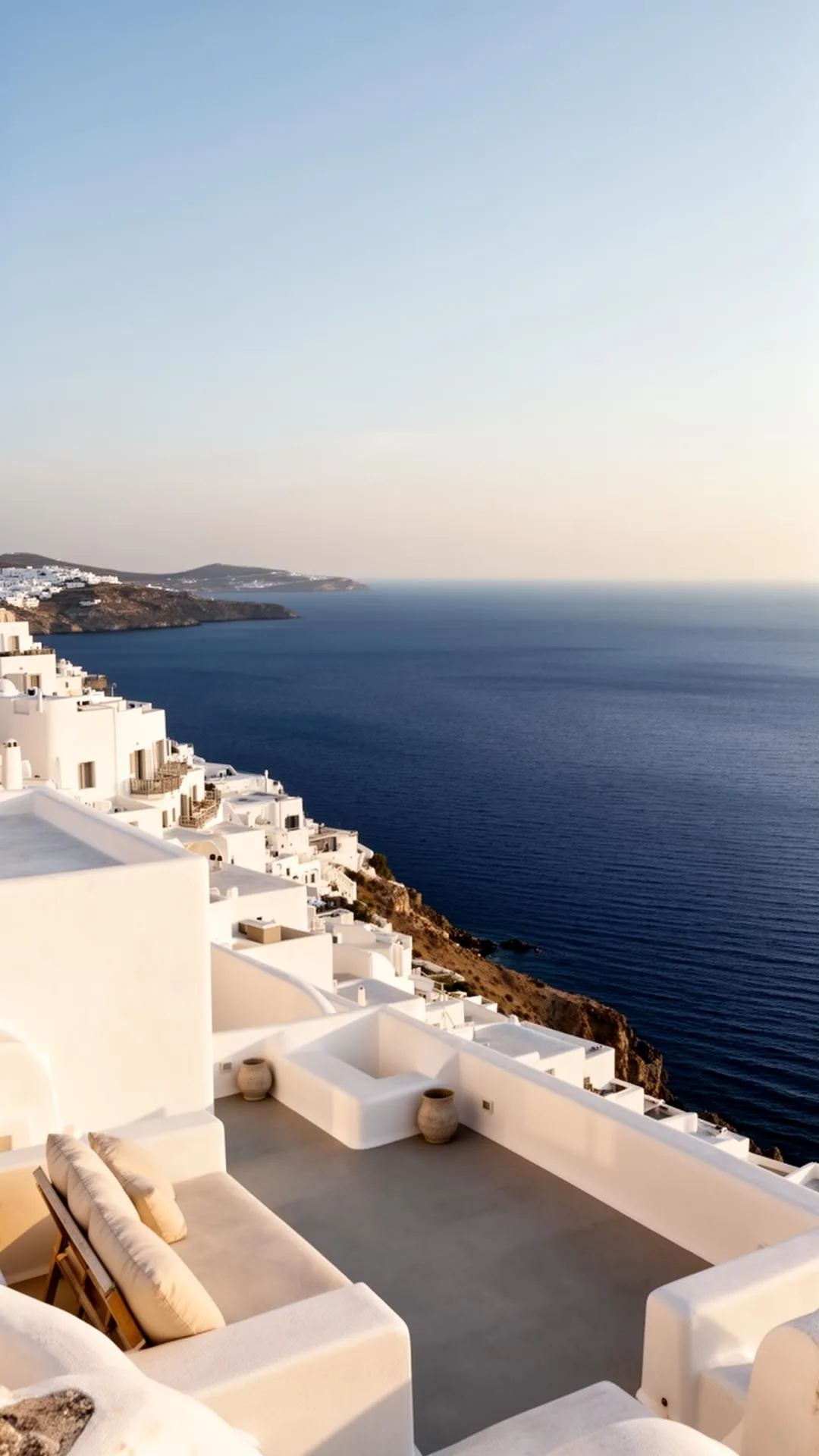
The Santorini market, honestly.
Santorini is one of the most price-elastic markets in Europe. Peak weeks around August 15 and the sunset shoulder in September and early October will absorb almost any rate a caldera-view suite can print, but pricing to the peak is what most operators get wrong. The money is in April, May, October and the compression weekends nobody plans for.
The comp set moves fast. New builds and renovations open every season, Booking.com Genius tiers are being re-ranked, and the meta layer (Google, Trivago, Kayak) is finally rewarding hotels that hold parity and push direct. A revenue desk that only touches the calendar once a week cannot keep up.
We watch pace daily against a live comp set, tier suite categories by view and floor, and price the shoulder season the way the peak deserves. Direct share is a first-class metric, not an afterthought.
What we do for Santorini hotels.
Tiered suite categories, view and floor premiums, event uplifts and stop-sell logic reviewed every morning of the season.
Booking.com and Expedia content rebuilt, Genius and Mobile levers dialed in, parity policed across meta and the direct channel.
Metasearch (Google Hotel Ads, Trivago), a rebuilt hotel website, and a repeat-guest layer so direct share compounds season over season.
Weekly forecast-versus-pace report straight to the owner's inbox. No dashboards to log into, no jargon.
Three shocks hit Santorini. Here is how our own hotel beat the market through all of them.
Overtourism backlash, an earthquake winter, and a supply wave that never stopped building. The numbers behind Santorini's hardest three years, and the playbook we ran at our own 15-suite hotel in Oia.
Shock one: the island became the poster child for overtourism.
By 2024, Santorini's success had turned on it. The island was drawing an estimated 3.4 million visitors a year against a population of roughly 15,500, and the story the international press told stopped being about sunsets.
The mayor warned publicly of a saturation crisis, and reports noted around 80,000 hotel beds, more per square metre than almost any other Greek destination, with a fifth of the island built over. Government responses followed: a sustainable tourism fee of up to 20 euros per cruise passenger in peak season, and a daily cap of 8,000 cruise visitors enforced through berth allocation.
For hotels, the damage was quieter than the headlines: the imagery that sold the island for a decade was now attached to words like crowds, queues and backlash.
Shock two: the earthquake winter.
In January and February 2025, thousands of tremors shook the caldera. Roughly 9,000 people left the island within days, public events were cancelled, and a state of emergency was declared. The seismic activity faded by spring and caused no significant damage, but the psychological effect on demand did not fade with it.
The president of the Santorini hoteliers association put the drop in arrivals at 20 to 30 percent, and 2025 became the first year since the pandemic that Santorini recorded a decline in tourist numbers. SETE, the Association of Greek Tourism Enterprises, reported airline seat capacity down 26 percent early in the year and projected season losses of 10 to 15 percent. Local businesses reported falling reservations, with some resorting to discounts of up to 40 percent to attract visitors.
Shock three: supply never stopped growing.
Through all of it, new inventory kept opening. By 2023 the island already counted around 4,783 Airbnb units with over 10,700 beds, close to the entire Airbnb bed count of metropolitan Athens.
Every season adds new builds and renovations to a market where demand was flat at best. More rooms chasing fewer guests is the simplest formula in revenue management, and it points one direction: down.
What we did at Alexander's Suites.
Alexander's Suites is our own 15-suite hotel in Oia. We do not advise this market from a distance; we price it every day with our own revenue on the line.
When the market turned, we rebuilt the commercial stack instead of doing what most of the island did, which was cut rates and hope. We moved the website and booking engine off the default Greek setup and rebuilt direct booking as a channel that carries no commission. We rebuilt SEO around the searches travellers actually make.
We widened distribution well beyond the usual three platforms: Trip.com for the Asian recovery, HyperGuest and Roibos for B2B demand, alongside fully optimised Booking.com, Airbnb, Expedia, Agoda and Hotelbeds. And we run pricing daily on PriceLabs, HotelLab and Lighthouse together, holding rate discipline in peak windows while pricing aggressively into the last-minute demand that panicking competitors were discounting away.
The market fell three seasons running. We did not follow it down. That is the whole point of revenue management: the market is a context, not a destiny.
What this means if you run a hotel here.
The operators hurt worst these three years shared one habit: they set rates in April and reacted in August. In a market this volatile, that is not a strategy, it is drift.
The recovery signals are real, with travel companies reporting a revival in bookings after the early slump, but the supply overhang is permanent and the next shock, whatever it is, will come. The hotels that will own the recovery are the ones with distribution wider than three channels and a rate desk that moves daily.
If you want to know what your property is leaving on the table, send us your listing links. You get a written audit back in 48 hours. No call, no obligation.
Run the desk on your Santorini property.
Send us the property and last season's numbers. You'll get a written revenue audit back within 48 hours. No obligation, no sales call.